 Skip to main content
Common Pest Prevention Mistakes Businesses Make
Pest activity can disrupt daily operations, damage inventory, create sanitation concerns, and affect how customers and employees view a business. While some infestations appear suddenly, many develop gradually because small maintenance, storage, or cleaning issues are left unresolved.
For businesses considering commercial pest control in Sacramento, understanding these contributing conditions is an important part of preventing repeated problems. Professional treatment may address active pest activity, but long-term control also depends on correcting the everyday practices that continue to make a property attractive or accessible to pests.
Below are some of the most common ways businesses unintentionally weaken their pest prevention efforts.
Waiting Until Pest Activity Becomes Visible
Seeing a cockroach, rodent, ant trail, or other pest may indicate that favorable conditions already exist. Pests can remain hidden in wall voids, storage rooms, ceiling spaces, and utility areas.
Routine monitoring helps businesses notice droppings, damaged packaging, nesting material, unusual odors, and grease marks. Prompt action can make the response more focused and limit disruption.
Relying Too Heavily on Store-Bought Products
Sprays, traps, and repellents may reduce visible pests without addressing the source. Using the wrong products or placing them incorrectly may scatter pests or push them into less accessible areas.
Effective commercial pest management begins with proper identification. A targeted plan considers where pests are entering, what attracts them, and which conditions support continued activity.
Leaving Entry Points Unsealed
Openings around doors, windows, pipes, vents, utility lines, foundations, and roof edges can provide access to insects and rodents. Delivery entrances may be especially vulnerable when left open.
Regular exterior inspections can reveal gaps that need door sweeps, screens, sealants, or repairs. Sealing does not replace treatment, but it supports long-term prevention.
Managing Waste Areas Inconsistently
Dumpsters, recycling containers, grease bins, and exposed food waste can attract flies, rodents, cockroaches, and ants. Overflowing containers, open lids, spills, and poorly placed waste increase the risk.
Businesses need a consistent cleaning and collection schedule. Containers should remain closed, surrounding surfaces should stay clean, and damaged bins should be replaced.
Allowing Food and Water Sources to Remain Available
Break rooms, kitchens, vending areas, floor drains, leaking pipes, condensation, and employee desks can provide food or moisture.
Food should be sealed, spills cleaned promptly, and plumbing concerns repaired. Areas beneath equipment and inside cabinets also need attention because crumbs and moisture can collect out of sight.
Overlooking Storage and Inventory Areas
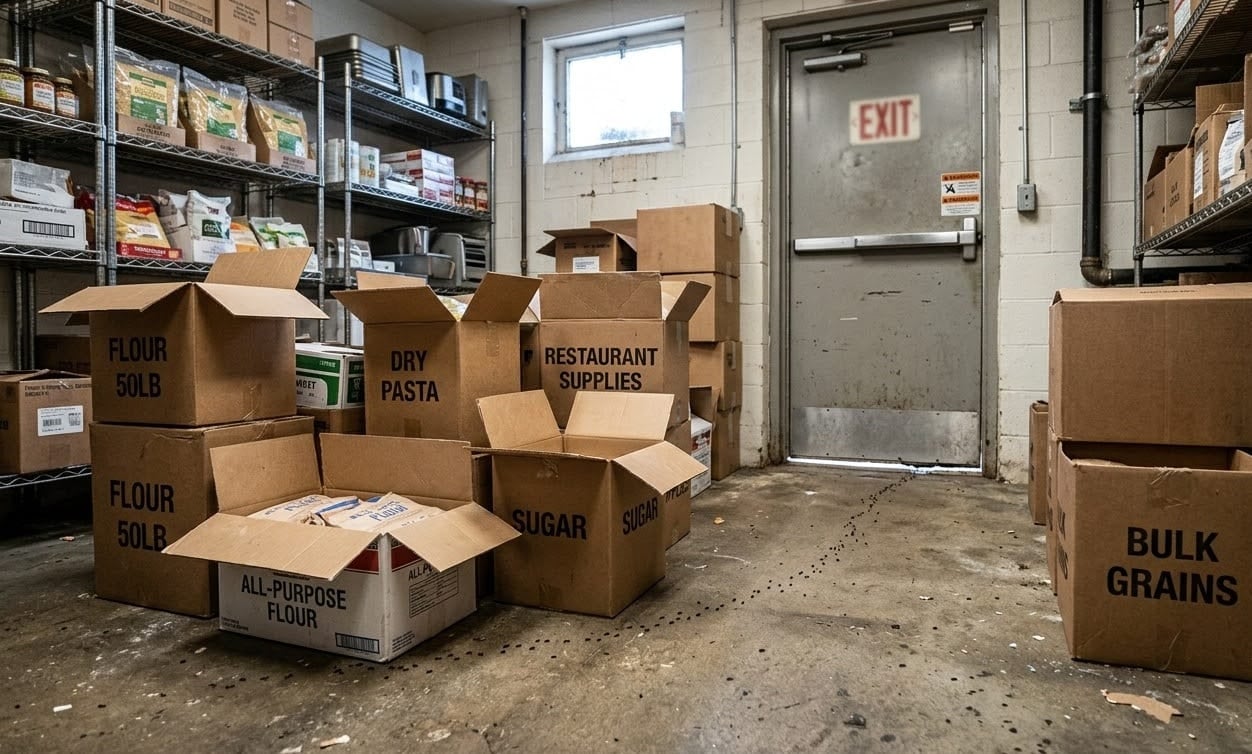
Crowded storage rooms create protected spaces where pests can hide. Cardboard, damaged packaging, unused equipment, and products placed against walls may also conceal activity.
Inventory should be arranged to allow cleaning and inspection. Incoming shipments should be checked for damaged cartons, droppings, insects, or other concerns. These habits strengthen pest prevention for businesses that receive frequent deliveries.
Ignoring Conditions Outside the Building
Pest activity inside a building often begins with conditions outside the property. Dense vegetation, standing water, clogged drains, debris, damaged irrigation, and branches touching the structure can bring pests closer to entry points.
Exterior inspections should include landscaping, loading zones, rooflines, and drainage features. Correcting outdoor attractants supports indoor control.
Treating Only the Immediate Problem Area
A sighting in one room does not always mean the issue is limited to that location. Pests may travel through plumbing lines, wall spaces, hallways, utility areas, or connected units.
Treatment should account for nearby rooms, shared walls, utility pathways, and connected units because pests rarely remain confined to the place where they were first seen.
Skipping Routine Inspections and Documentation
Without scheduled inspections, recurring pest activity, seasonal activity, and unresolved maintenance concerns may be difficult to identify.
A documented commercial pest control plan can record sightings, treatment areas, sanitation concerns, repairs, and follow-up actions. These records support clearer and more consistent decisions.
Leaving Employees Out of Pest Prevention
Employees often notice activity first, but they may not know what to report or whom to contact. Food storage, waste handling, and clutter can also contribute to pest concerns.
Basic training should cover warning signs, reporting procedures, and sanitation expectations. Prevention works best when employees, cleaners, maintenance staff, and managers understand their responsibilities.
Creating a More Reliable Pest Prevention Strategy
An effective program combines sanitation, maintenance, monitoring, employee awareness, and professional guidance. Procedures should be reviewed when operations, inventory, occupancy, or seasonal conditions change.
CalPro Pest Control provides commercial pest control services in Sacramento for offices, restaurants, retail spaces, warehouses, property management companies, and other commercial environments. A property-specific assessment can identify active concerns and conditions that may allow pests to return.