 Skip to main content
What Is a WDO Inspection, and Why Does It Matter in California?
Termites and other wood destroying organisms can affect homes across California, often causing damage that remains unnoticed for a long time. Since these pests can be difficult to detect, understanding their potential impact is important for homeowners who want to protect their properties.
For those considering a termite inspection in Sacramento and nearby areas, understanding what a WDO inspection involves is a useful starting point. This article explains what these inspections are, why they matter, and what property owners should know about them.
What Is a WDO Inspection?
A WDO inspection is a professional assessment that identifies wood destroying organisms, evidence of their activity, and conditions that may encourage infestations. Unlike a general home inspection, which evaluates a property’s overall condition, a WDO inspection focuses specifically on wood destroying pests, fungal damage, and related risk factors.
Depending on the property and inspection conditions, inspectors may look for evidence of:
- Termites: Insects that feed on cellulose and can damage wooden structures.
- Wood boring beetles: Insects whose larvae tunnel through wood, sometimes leaving small exit holes.
- Carpenter ants: Ants that excavate wood to create nesting spaces.
- Wood destroying fungi: Fungi that break down wood, often where excessive moisture is present.
Why Are WDO Inspections Important in California?
California’s climate and varied property conditions can create favorable environments for termites and other wood destroying organisms. Subterranean termites, for example, can enter buildings through soil contact, while drywood termites may infest exposed structural wood.
A professional inspection helps identify concerns before damage becomes extensive. It also provides valuable information about a property’s condition, allowing owners to plan appropriate maintenance and repairs.
What Happens During a WDO Inspection?
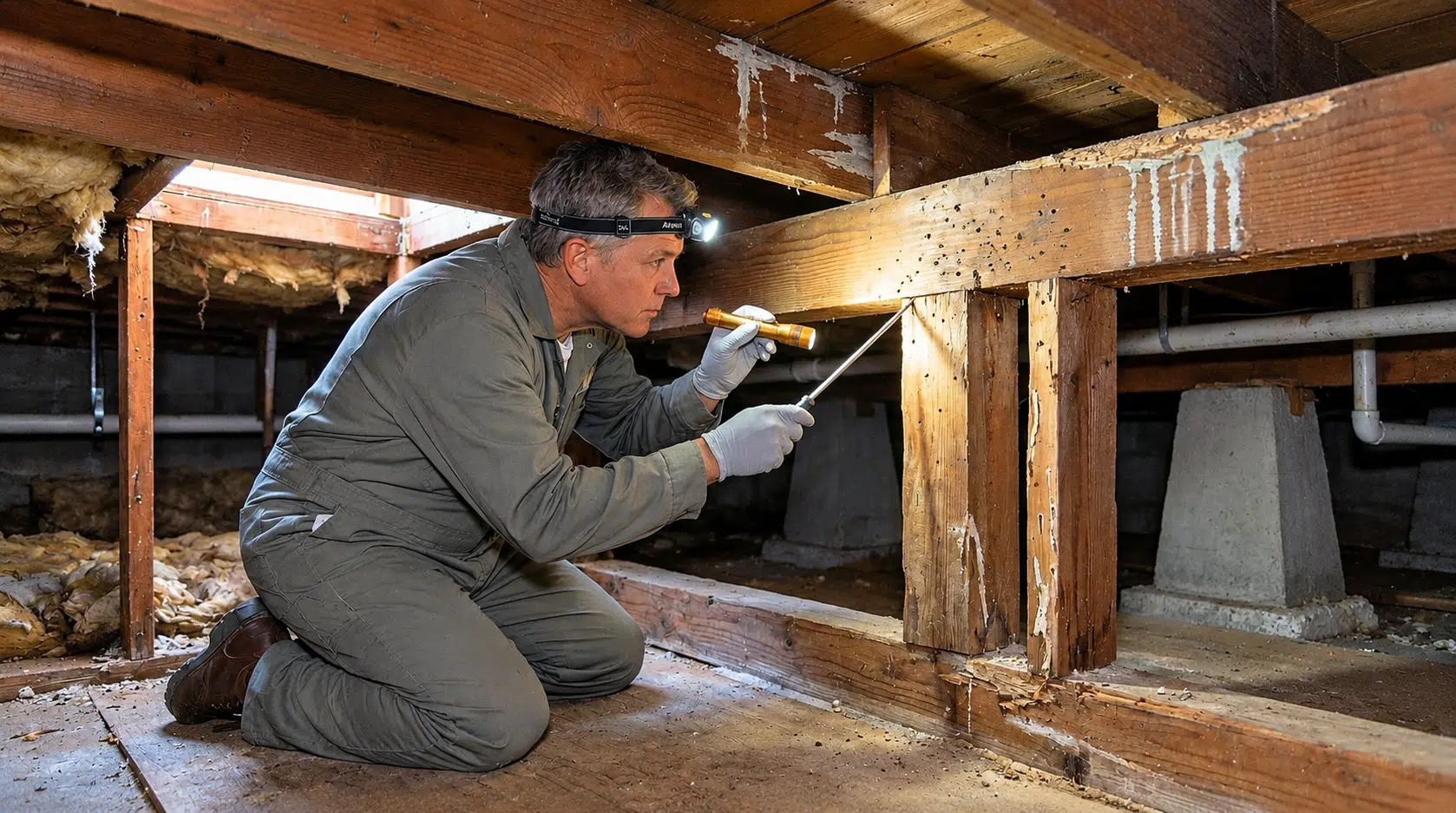
During a WDO inspection, a licensed inspector examines accessible areas inside and outside the property. These may include crawl spaces, foundations, attics, wooden framing, and other areas vulnerable to infestation. The inspector checks for visible signs of wood destroying organisms and conditions that may encourage their activity, including:
- Mud tubes along foundations or walls
- Damaged, hollowed, or weakened wood
- Discarded termite wings and droppings
- Excessive moisture or wood in contact with soil
- Visible fungal deterioration
The inspector documents the findings and identifies any areas that could not be accessed. This information helps determine whether further investigation or corrective action may be necessary.
What Does a California WDO Inspection Report Include?
A California WDO inspection report documents the property’s inspected areas, evidence of infestation or infection, damaged wood, and conditions that could encourage future problems. It also includes diagrams identifying affected locations and recommendations for corrective measures.
The findings are generally divided into two sections:
- Section 1 findings identify existing infestations, infections, or damage caused by wood destroying organisms that require attention.
- Section 2 findings describe conditions that may encourage future infestation or infection, such as excessive moisture or wood touching soil, without necessarily indicating an active infestation.
Knowing the difference between these findings helps homeowners prioritize concerns and plan appropriate corrective action.
When Should You Schedule a WDO Inspection?
A WDO inspection is worth considering when buying or selling a home, noticing unexplained wood deterioration, or discovering persistent moisture problems.
Routine inspections are also useful for monitoring property conditions, particularly in areas where termites are common. The appropriate schedule depends on the property’s age, condition, previous infestations, and exposure to moisture.
What Happens If a WDO Inspection Reveals a Problem?
If a WDO inspection identifies termite activity or damaged wood, the next steps depend on the nature and extent of the problem. Professional termite treatment may be recommended to address an infestation, while damaged wooden structures may require repairs.
In some cases, correcting moisture problems or other conditions that encourage pest activity may also be necessary. Following the inspector’s recommendations can help homeowners address existing concerns and reduce the risk of future damage.
Schedule a Professional WDO Inspection With CalPro Pest Control
A timely WDO inspection can help you stay informed about your property’s condition and address potential concerns before they become serious. Whether you’re preparing for a property transaction or checking for possible termite activity, professional guidance can help you take the appropriate next steps.
CalPro Pest Control offers WDO termite inspections in Sacramento and surrounding areas, providing detailed findings and recommendations based on your property’s condition. Contact us today to schedule an inspection and get the information you need to protect your home.